
Can switching shampoo really help you retire earlier?
Shampoo vs. Freedom: The FIRE Debate Everyone Gets Wrong

I’ve seen this debate come up over and over again in the personal finance world:
Side A: "Stop worrying about lattes. Focus on the big wins!"
Side B: "Every single dollar counts! "
It is amazing how strenuously people debate this sorta thing. Who’s right? The annoying answer is... both.
(Yeah, I know. Boring assed answer.)
The Big Heavy Hitters
If you want to dramatically pull in your “freedom date” the biggest wins come from your largest expenses: Housing, food, and vehicles. Seriously, America... we spend a ridiculous amount of money on cars! ( Another post for another day). Make a 20% cut on those and invest it and you can retire many years earlier. No doubt about that. Focus there first.
Why "Tiny" Savings Actually Matter
Where I think people miss the point on small expenses is focusing strictly on the dollar amount instead of the percentage.
Take shampoo.
I have a brand I like. It’s not even fancy—you can grab it at Walmart. But right next to it sits a generic version that costs less than half as much.
Can saving five bucks on shampoo change your life? Of course not.
But it’s 63% cheaper. And that's the important part. It's not the 5 dollars. It's the percentages. It's all about the percentages!
If you can make just one change today, I suggest you decide from here on out to think in terms of percentages rather than dollars.
Imagine if you could pull off a 63% discount across everything you regularly buy—without depriving yourself, just swapping for the equivalent generic. If you saved 63% on everything you would retire decades earlier.
Obviously, nobody actually does that. At least, I don't. I'm lazy. Let's say you're more like me in that you're just slightly lazy. (It’s ok to admit and give yourself props for being self aware.)
What if you only found ten purchases like shampoo? You can do that. Trust me — it won't even be difficult . Just ten everyday items—toothpaste, canned tomatoes, laundry detergent, paper towels—where you swapped to a generic and saved 50–60%.
Doing the "Lazy" Math
The funny thing about math is that it doesn't care whether your savings came from a car payment or laundry detergent.
If you swap 10 regular household items to generic brands, you might save roughly $30 to $40 a month. And here's the thing that percentage you saved that month will happen over and over again like a subscription. Except not the evil kind of subscription that’s draining your credit card, Let’s call this the the “Superstar Subscription”. You do the work one time by making this change and it keeps reaping benefits for you year after year.
Invest that difference over a typical 30-year career while your bestie “compound interest” flexes her badass muscles turning that Superstar Subscription into $56,000!
For the median American household, that’s enough to retire around ten months earlier.
Ten months, people!
That’s roughly 200 mornings where your alarm doesn’t drag you out of bed to do work you stopped enjoying years ago. And yes, I hear you. Maybe you absolutely love your job right now and great for you. But there may come a day when you would rather choose NOT to work a specific 10 months span in order to do some of the following:
Ditch your job to travel and help raise your first grandchild
Hiking national parks
Learning a language -- in the country where it is spoken
Building furniture from scratch
Reading on a rainy Tuesday afternoon
Taking a spontaneous road trip just because it’s sunny
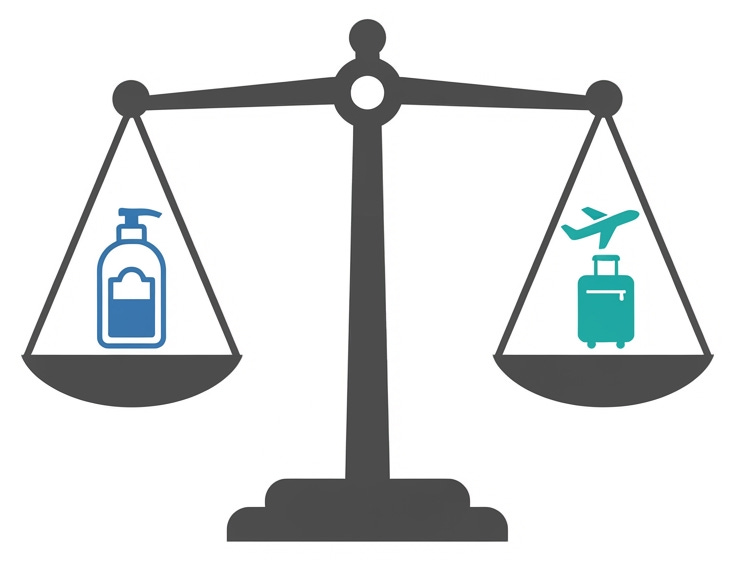
That’s the real trade-off. It’s not Brand Name vs. Generic Shampoo.
It’s Shampoo vs. 10 Months of Freedom!
The Real Question
If you blindfolded me for a taste test (definitely not a taste test—that’s disgusting), I’m not even convinced I could tell the difference between the two shampoos.
And even if I could... would I care enough to willingly work an extra ten months for it? Not a chance.
Everybody gets to decide what matters to them. If your expensive shampoo genuinely brings you enough daily joy to be worth trading away ten months of freedom, buy it with zero guilt!
Just make sure you make that decision consciously. Because almost every purchase is secretly asking the exact same question:
"Would you rather have this... or a little more freedom later?"
One bottle of shampoo won't retire you early. But hundreds of small, conscious decisions repeated over decades?
Those absolutely can.
(I spent this weekday morning playing pickleball with friends while 99% of my peers were at work stuck in some meeting that could have been an email…)